
Cactus Rescue
“When we have the opportunity to rescue saguaros, everybody feels so good about it because they’re not going to be destroyed.”
-
If you are interested in finding out if we can rescue your cacti, please email TCSS@tucsoncactus.org or call/text 520-256-2447, include photos and we’ll assess whether your project qualifies for a rescue. We are all volunteers and only rescue cacti that won’t put our crew in danger, are viable, and can be planted in Pima Prickly Park or added to a sale.
-
Saguaros are assessed individually to determine if they are a size that our volunteers and equipment can handle. Most over 6-foot or with arms, are declined, but contact us if you have questions.
-
Fallen large saguaros or large barrels are not rescuable. They likely have internal damage from the fall, may be a victim of disease, or are have fallen because of old age. If they have fallen in a desert area, then it’s best for them to decompose as part of the natural eco-system. If you need a fallen saguaro or barrel removed, please contact a landscaper.

Native Cactus Rescue
Native Cactus Rescue Lead
Donna Ellis
The Native Cactus Rescue program salvages native plants in undisturbed areas undergoing development.
Public utilities - Gas, Water, Electric, etc.
Road construction
Schools
Home builders
Davis Monthan Air Force Base
Mines & Quarries
Tribal land
Private land owners with over 10 acres of undisturbed land

Rescue volunteers digging a Sotol (Desert Spoon).
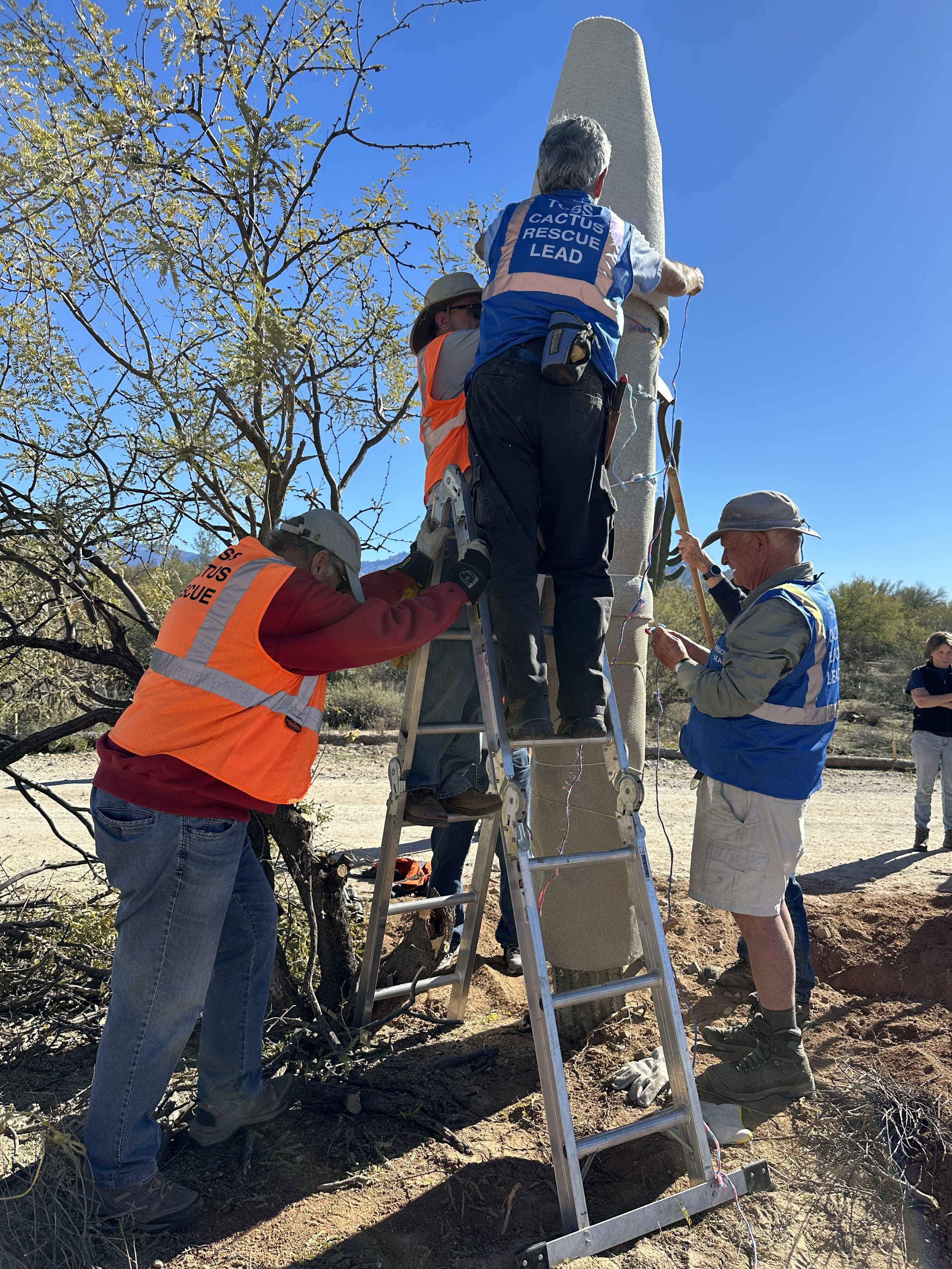
Wrapping a saguaro in preparation for digging.

Triple saguaro wrapped and ready to dig.

Volunteers carrying a saguaro out of the rescue area.
Volunteers lifting a saguaro onto the trailer to be tagged and taken to Pima Prickly Park or to sell in one of the club’s many public sales.
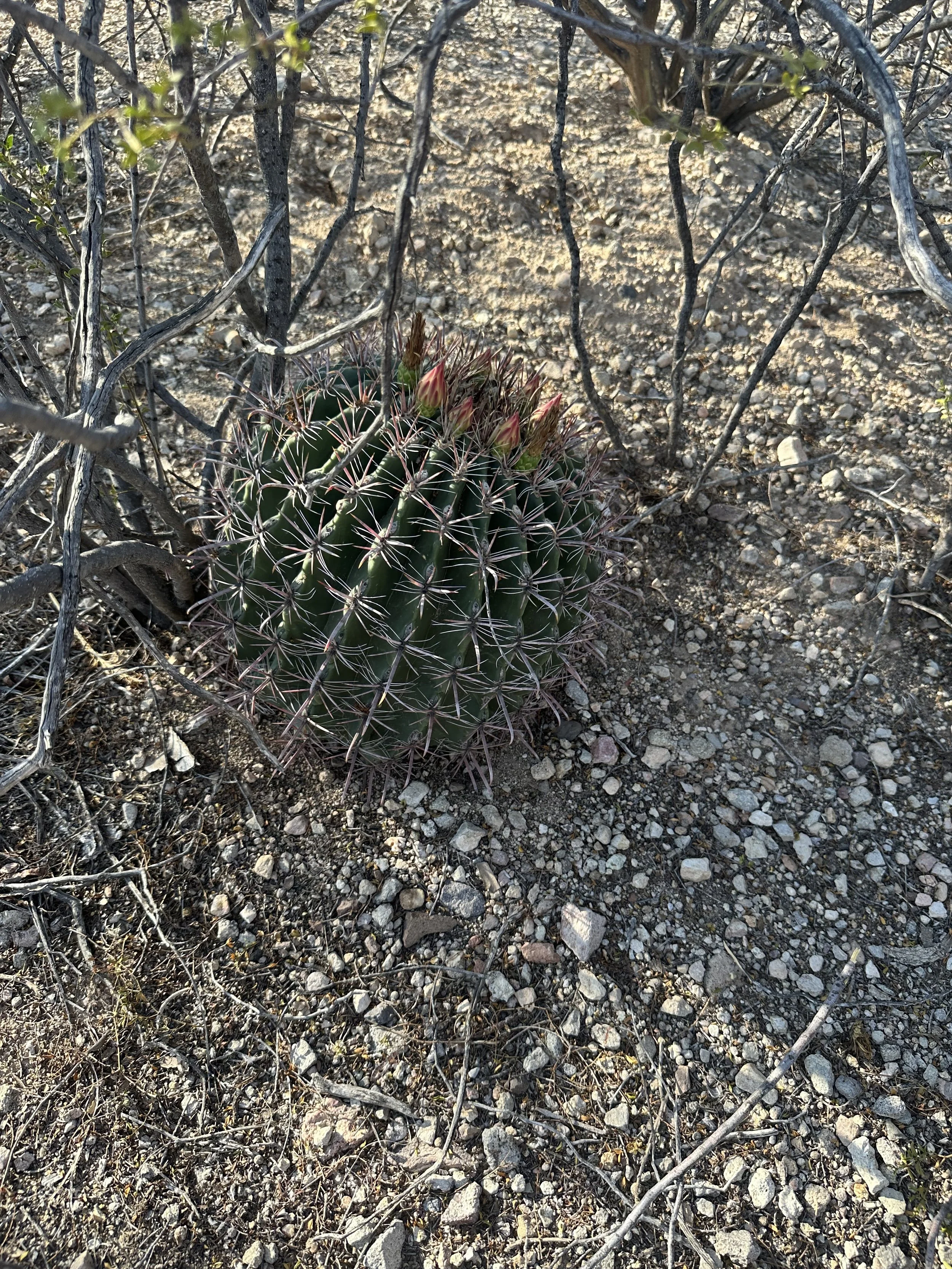
Always look for hidden treasures!
-
At Native Rescues, our crew volunteers dig up and move the cacti out of harm’s way. Some plants go home with the volunteers, some are transplanted to Pima Prickly Park, and the rest are sold at our plant sales.
Our efforts are supplemental to the on-site preservation that may be required by development permits and Native Plant Protection Ordinances (NPPO).
By selling our rescued cacti at reasonable costs to the public, we not only save these native plants, but encourage homeowners to use native plants in their landscapes, saving water, and preserving our Southern Arizona plant gene-pool.
Proceeds of sales and silent auctions support TCSS’s many educational and conservation programs and activities.
Urban Cactus Rescue
Urban Cactus Rescue Lead
Julie Shulick
The Urban Cactus Rescue program works to save cacti and succulents at the request of homeowners.


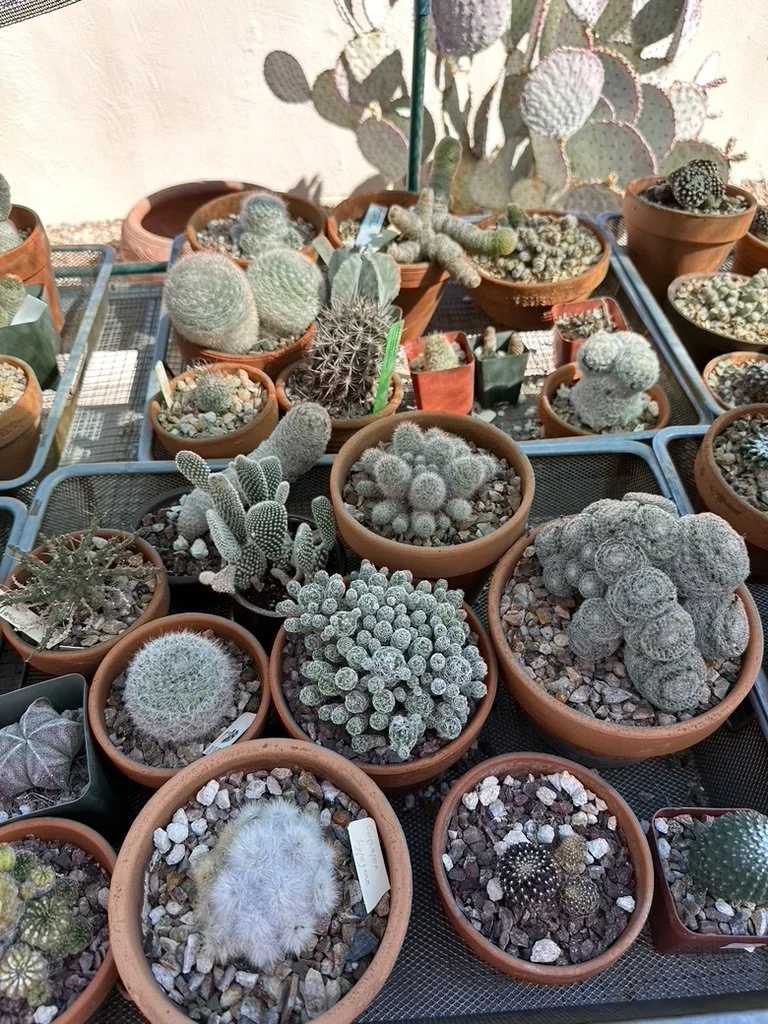
A collection of donated cacti and succulents.
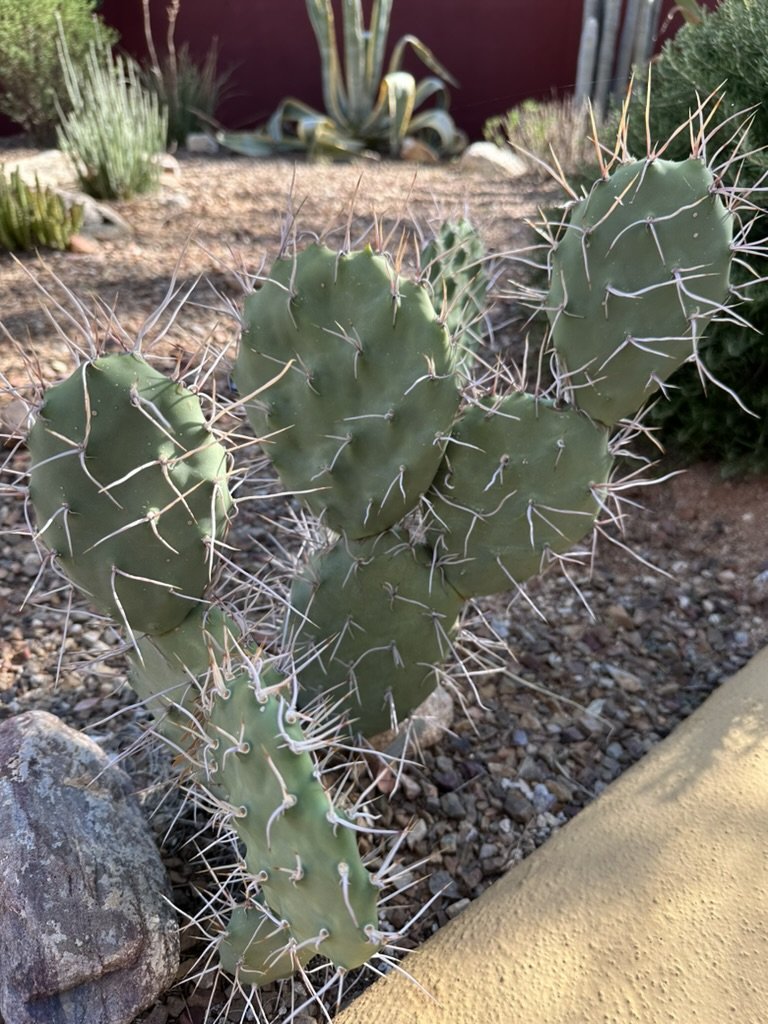
A special prickly pear cactus rescued.

A saguaro growing too close to the house.

Volunteers planting the Crazy Saguaro donated to Pima Prickly Park.
-
The Urban Cactus Rescue program often gets calls from homeowners wishing to donate cacti. These donations are often the result of plants that have outgrown their space or are located in a place where a home remodel or landscape change might otherwise destroy the plants.
The Urban Rescue team determines what plants will benefit the club and are able to be rescued safely with the equipment and volunteers available.
We also re-home special collections (in pots or in the landscape) where the homeowner is moving and would like to donate their collection to be cared for by members who love cactus and succulents. These are often considered special rescues and may lead to a club silent auction of the plants.
Proceeds of sales and silent auctions support our many educational and conservation programs and activities.
Frequently Asked Questions
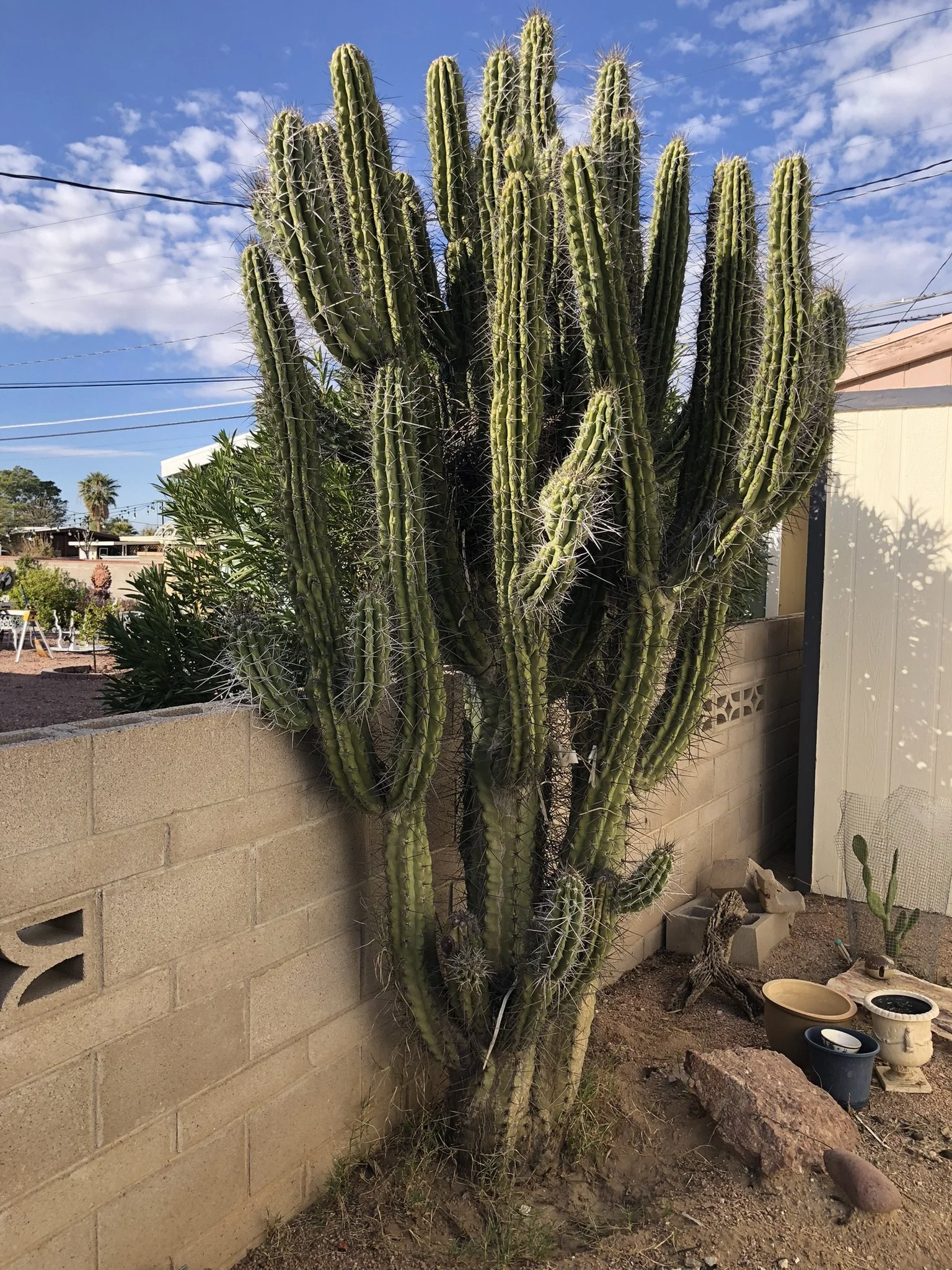
Toothpick Cactus (Stetsonia coryne)
-
Suh WAHR oh
-
Well, it depends. A saguaro growing in the open desert grows slowly depending on our yearly rainfall. A saguaro growing in a landscape can grow much faster since it can get more water from other sources, like, a nearby drip system, a neighbor’s grass, or runoff from your roof.
-
We limit the height of saguaros to about 6 or 7 feet depending on the diameter. They can be very heavy at that height and become dangerous to rescue and to sell so we are careful to only rescue saguaros that are safe for all involved.
-
We rescue cacti for many different reasons. We work with Pima County, Tucson Electric Power Co., developers and many other companies. When areas are being developed the companies may call us to remove Native Cacti that are in the way and could be damaged or destroyed.
-
We accept cacti and succulents on a case by case basis. If you can email us photos of what you would like to donate then that will help determine if we can rescue it.
-
Sometimes. It depends on the variety and condition. Contact us and send us a photo to get a better idea.
-
Sorry, you will need to hire a landscaper for moving your cacti. We only take saguaros as donations.
-
We often plant the donated cacti we rescue in Pima Prickly Park located at 3600 W River Road in Tucson, AZ. Sometimes very beautiful specimens are added to our Sales area for upcoming public sales. We also sell cacti to the volunteers who help with the rescue.
-
The Cactus Rescue Program is a free service. We do not charge for donated cacti. The costs of running the Rescue Programs are offset by the sales of rescue cacti and monetary donations. We will gladly take monetary donations in any amount.
-
Arizona Native plants are protected. When TCSS is called to rescue saguaros or other native plants, the correct tags and permits are acquired to comply with State laws.
-
We don’t judge. People want to donate their cacti for many reasons. We live in the desert and we all know it saves water to plant native species, but many of us have non-native plants in our own landscapes. We are grateful for all of our donations.